
About Kilimanjaro
The Roof of Africa
Mount Kilimanjaro rises 19,341 feet (5,895 meters) above sea level, earning its distinction as the highest mountain in Africa and the “Roof of Africa.” The world's highest free-standing mountain, it rises dramatically above the surrounding Tanzanian savannah, its snow-capped summit visible across the plains. Designated a UNESCO World Heritage Site in 1987, Kilimanjaro is celebrated for its extraordinary landscapes, diverse ecosystems, glaciers, and scientific importance.
Unlike mountain ranges formed by the collision of tectonic plates, Kilimanjaro stands in relative isolation, an immense volcanic massif shaped by millions of years of geological activity. Its three principal volcanic peaks—Shira, Mawenzi, and Kibo—give the mountain its distinctive profile and tell the story of its complex volcanic origins.
The Name and Its Cultural Heritage
The origin of the name Kilimanjaro remains uncertain, with several interpretations rooted in the languages and traditions of East Africa. One commonly cited explanation combines the Swahili word kilima, meaning mountain or hill, with njaro, sometimes interpreted as whiteness or shining. However, there is no universally accepted explanation for the name.
The mountain's three principal peaks are known as Shira, Mawenzi, and Kibo. The highest point of Kibo is Uhuru Peak, meaning “Freedom Peak,” a name adopted in 1961 to mark Tanzania's independence.
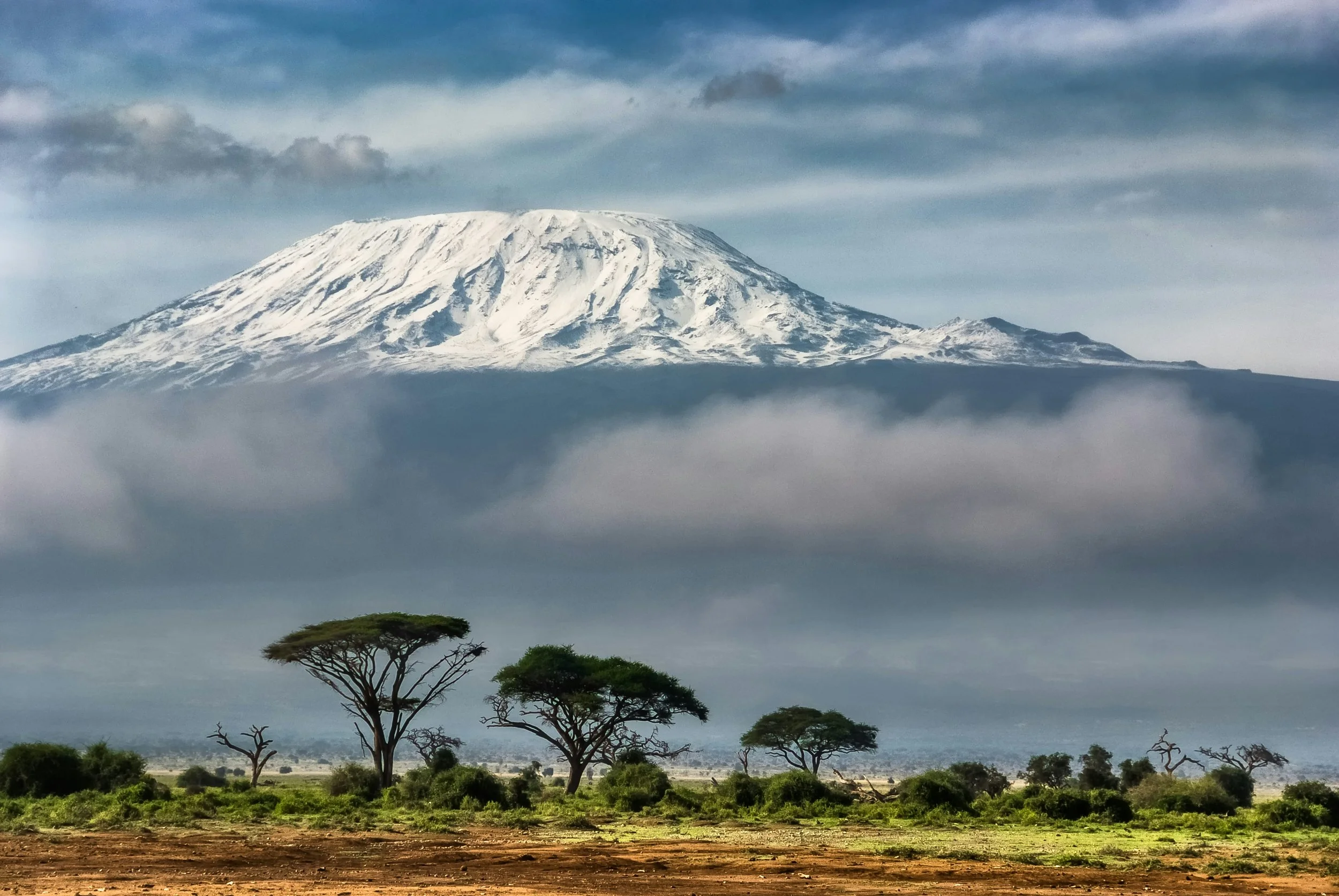
Photo by Sergey Pesterev on Unsplash
Ecosystems, Glaciers, and Conservation
Kilimanjaro's extraordinary elevation creates a succession of distinct ecological zones, each with its own climate, vegetation, and wildlife. From cultivated lower slopes and lush montane forests to heathlands, alpine deserts, and the stark summit environment, the mountain supports a remarkable range of habitats within a relatively compact geographic area.
The summit glaciers and ice fields are among Kilimanjaro's most recognizable features. These ice formations have diminished substantially over the past century, making the mountain an important location for studying changes in high-altitude environments and tropical ice.
Kilimanjaro's forests, water resources, biodiversity, and glaciers are all important components of a fragile mountain ecosystem. Their preservation is essential not only for the wildlife and natural environments of the mountain but also for the communities whose lives and livelihoods depend upon its resources.
Today, Kilimanjaro stands as both a natural wonder and an important place for scientific study, environmental awareness, and conservation. Its geological history tells the story of a mountain shaped over millions of years, while its changing landscapes remind us of the importance of protecting the natural world.
Kilimanjaro is more than a summit to reach. It is a geological record, a living ecosystem, and a mountain whose significance extends far beyond its height.
A Mountain of Cultural and Spiritual Significance
For generations, the Chagga and Maasai communities have lived in the greater Kilimanjaro region, developing enduring cultural, historical, and spiritual connections to the mountain.
For the Chagga, whose communities occupy the mountain's southern and eastern slopes, Kilimanjaro has long been central to daily life and traditional beliefs. Their spiritual traditions include reverence for Ruwa, a supreme deity, as well as respect for ancestral and nature spirits associated with the mountain. Kibo, the highest volcanic peak, holds particular cultural significance. Historical accounts describe the tradition of burying the dead facing Kibo, reflecting the mountain's enduring place in Chagga beliefs and customs.
The Maasai, whose traditional lands extend across the surrounding plains of northern Tanzania and southern Kenya, also have a longstanding relationship with the mountain. Known in Maa as Oldoinyo Oibor, or “White Mountain,” Kilimanjaro is a prominent landmark in their traditional landscape. Maasai spirituality centers on Ngai, also known as Enkai, the supreme deity associated with the sky and the natural world. The mountain's imposing presence and snow-covered summit form part of the broader cultural landscape in which these traditions developed.
Although their histories and beliefs are distinct, both communities reflect the importance of Kilimanjaro beyond its physical stature. It is a defining feature of their homeland, a source of natural resources, and a lasting presence in the cultural heritage of the region.
History and Exploration
Kilimanjaro has captured the imagination of explorers, geographers, and naturalists for centuries. European accounts of the mountain began in the mid-19th century, when German missionary Johannes Rebmann reported seeing its snow-covered summit in 1848. His account challenged prevailing European assumptions that permanent snow could not exist so close to the equator.
For decades, the existence of equatorial snow and ice remained a subject of skepticism among European observers.
In 1889, German geographer Hans Meyer and Austrian mountaineer Ludwig Purtscheller achieved the first documented successful ascent of Kibo, reaching its highest point on October 5. Their expedition established Kilimanjaro as a major destination for scientific exploration and mountaineering.
Today, the mountain continues to attract climbers, researchers, and visitors from around the world.
Geological Origins: Three Volcanic Peaks
Kilimanjaro is a massive volcanic complex associated with tectonic activity along the East African Rift system. Its formation spans approximately 2.5 million years, reflecting multiple phases of volcanic activity that produced three principal volcanic centers: Shira, Mawenzi, and Kibo.
Although these centers developed at different times, their volcanic histories overlapped. Together, they created the distinctive mountain landscape we see today.
Shira — The Ancient Foundation (2.5–1.9 million years ago)
Shira is the oldest of Kilimanjaro's three volcanic centers. Volcanic activity began approximately 2.5 million years ago, producing a substantial volcanic cone. Its major period of activity ended around 1.9 million years ago, followed by the collapse of the northern portion of the structure. Erosion and subsequent geological processes left the broad plateau and ridges that characterize Shira today.
Mawenzi — The Eroded Giant (approximately 1 million–450,000 years ago)
Volcanic activity shifted eastward approximately 1 million years ago, contributing to the development of Mawenzi and Kibo. Mawenzi's younger volcanic rocks have been dated to approximately 492,000–448,000 years ago, representing its final major stages of construction.
Since volcanic activity ceased, extensive erosion has reshaped Mawenzi into a rugged landscape of jagged pinnacles, steep cliffs, and deeply dissected gullies. Its dramatic formations reveal the effects of hundreds of thousands of years of weathering and erosion on an older volcanic structure.
Kibo — The Summit Volcano (approximately 1 million–165,000 years ago)
Kibo is the central and highest of Kilimanjaro's volcanic centers. Its oldest dated volcanic rocks are approximately 482,000 years old, although its initial development began earlier. Major periods of lava emplacement occurred between approximately 460,000 and 337,000 years ago, building much of the volcano's structure.
The present summit cone developed later, approximately 274,000–170,000 years ago. The youngest known volcanic products date to approximately 195,000–165,000 years ago.
Kibo's broad summit contains a large caldera, within which lies Reusch Crater. At the center of Reusch Crater is the Ash Pit, a smaller, nearly circular depression associated with the mountain's volcanic history.
Although Kilimanjaro is generally considered dormant, volcanic heat remains present beneath the summit. Fumaroles within the crater area release gases, providing evidence of continuing geothermal activity.
Together, these three volcanic centers reveal a complex geological history spanning millions of years. From the ancient remains of Shira to the deeply eroded pinnacles of Mawenzi and the relatively younger summit structure of Kibo, Kilimanjaro provides a remarkable record of volcanic construction, collapse, erosion, and continuing geological processes.
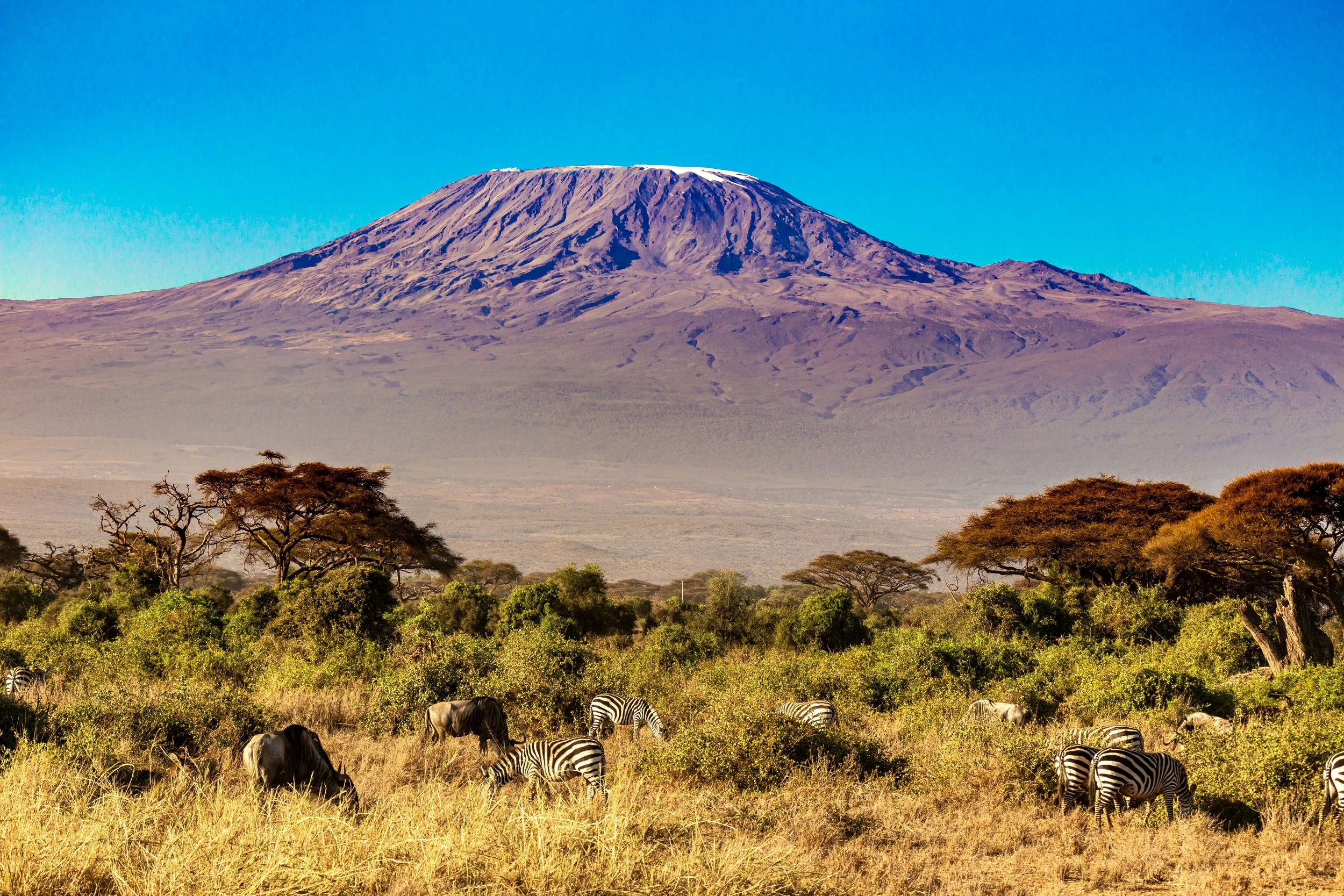
Photo by Stephan Bechert on Unsplash